


Real-world installations have a way of highlighting details you don’t always catch at the design stage.

During a Hubsense lighting rollout, we noticed our aluminium enclosures were disrupting signal strength for the mesh quality of the lighting control system.
ON-SITE ASSESSMENT & RETROFIT
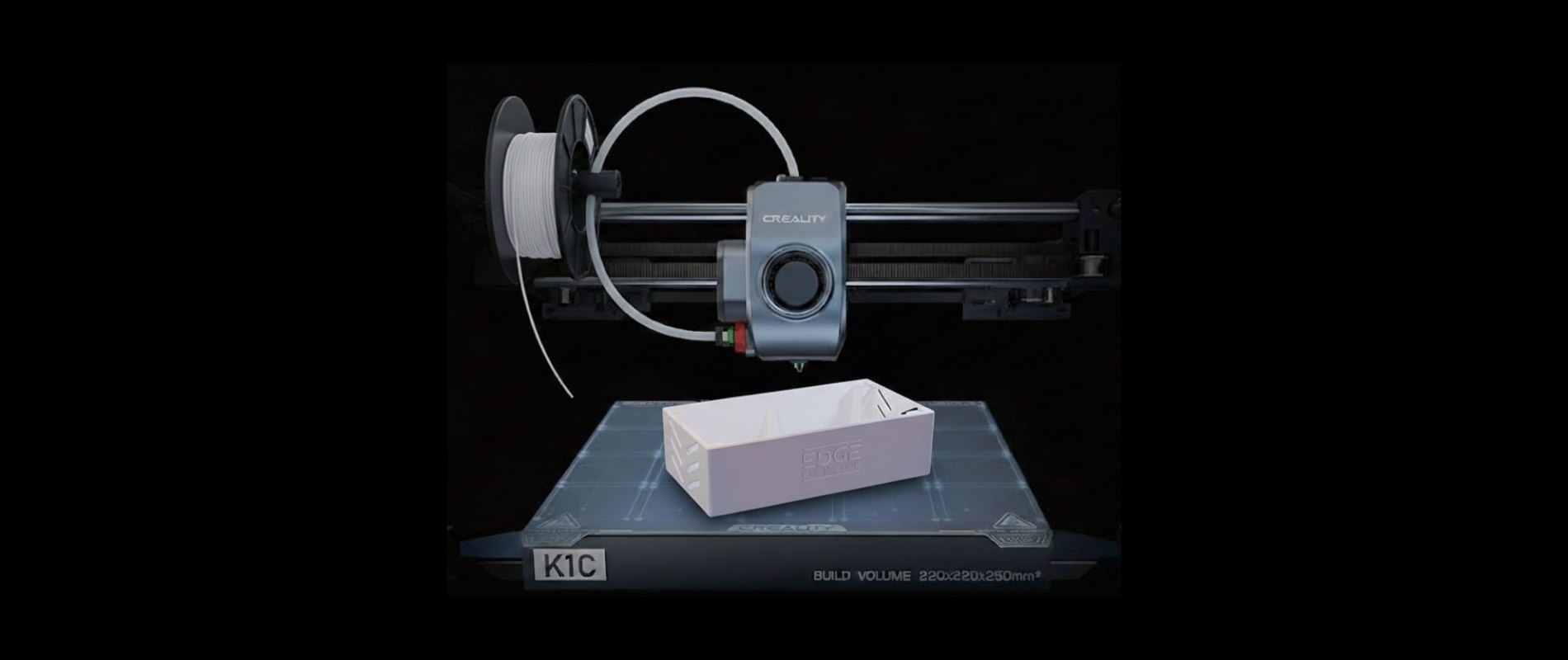
Our product design team were straight out to a few sites to identify the faults, design and manufacture new 3D-printed cover plates, and re-fit across all affected sites, all before the jobs were offsite.
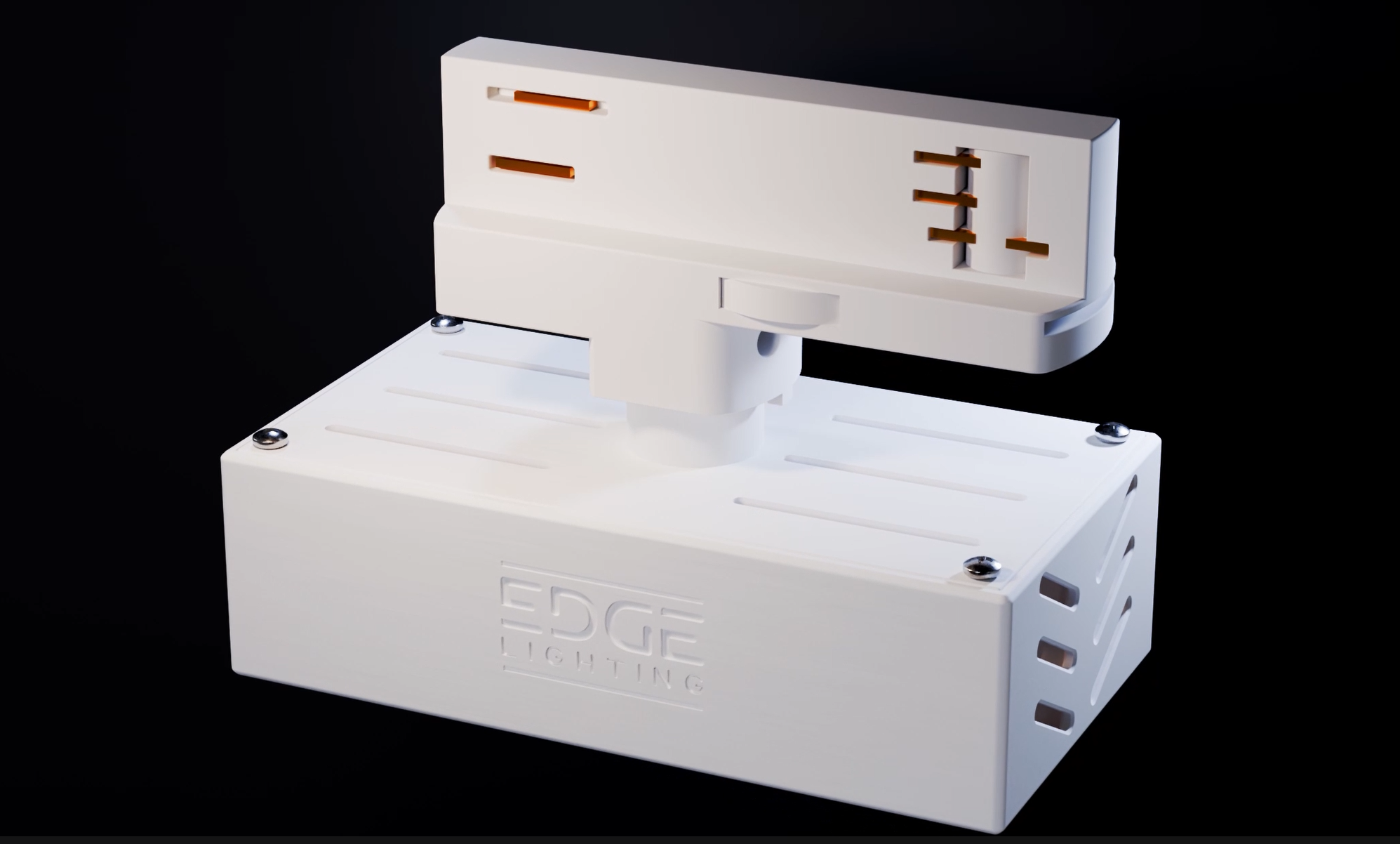
Rather than replacing hardware already installed on site, we designed a 3D-printed adaptor that works with the existing metal top plate, improving performance without disruption.
REVIEWING ENCLOSURE MATERIAL PERFORMANCE
During design, we reviewed how the Track Node performed when installed within different enclosure materials. While the original aluminium housing is cost effective and offered robustness, live environments showed that a 3D-printed solution allowed Bluetooth signals to perform uninterrupted.

REPURPOSING & PIR INTEGRATION
The returned aluminium enclosures were then re-purposed for PIR integration by punching holes to house them and avoiding the same connectivity issue, saving unnecessary product waste.
FROM CAD TO IN-HOUSE PRODUCTION
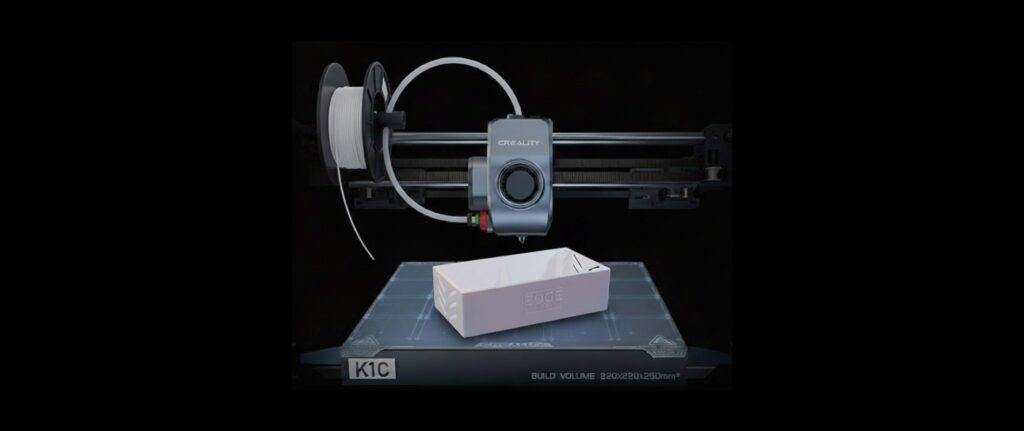
At Edge Lighting, we use 3D printing as a manufacturing tool, not just for prototyping. That meant moving quickly from CAD to in-house production, creating a stronger, vented housing with subtle branding and future flexibility, including a removable cut-out for PIR integration.
WHY PETG AND WHY IT MATTERS
Choosing the right material wasn’t just a technical decision, it was an opportunity to do things properly from an environmental standpoint too.
We manufactured our housing adaptors using PETG (Polyethylene Terephthalate Glycol), a glycol-modified variant of PET, the same base polymer found in widely recycled plastic bottles.
PETG is fully recyclable at end of life, meaning these components can be processed through standard plastic recycling streams rather than ending up in landfill.
Impact resistant, dimensionally stable, and performing reliably across the temperature ranges typical of in-ceiling and enclosure-mounted installations, It’s a material built for real environments, not just lab conditions.
By choosing PETG, we were able to:
- Manufacture the adaptors in-house using our existing additive manufacturing capability
- Eliminate the signal interference associated with metallic enclosures
- Produce a fully recyclable component that reduces long-term waste
- Retain and repurpose the original aluminium enclosures rather than scrapping them
OUTCOME
It’s in our DNA to anticipate and react quickly, ensuring our clients are uninterrupted and it’s business as usual.
A small design change, driven by real-world use, making the system more reliable and adaptable going forward!
